Why do pool safety inspections fail?
A pool can look tidy and still fail because a gate does not latch, a child can climb the fence, or a gap allows access underneath. Queensland pool safety inspections check the entire barrier — including gates, boundary fences and relevant doors, windows and balconies — against the pool safety standard.
These ten common failure reasons are a practical starting point for Sunshine Coast owners, not a ranking or a complete assessment. Use our interactive inspection checklist and free downloadable PDF as you walk around your pool.
Keep your barrier compliant at all times. A repair period after a failed inspection is not permission to leave an unsafe barrier in place. Supervision never replaces a compliant pool fence.
1. The gate does not self-close and self-latch
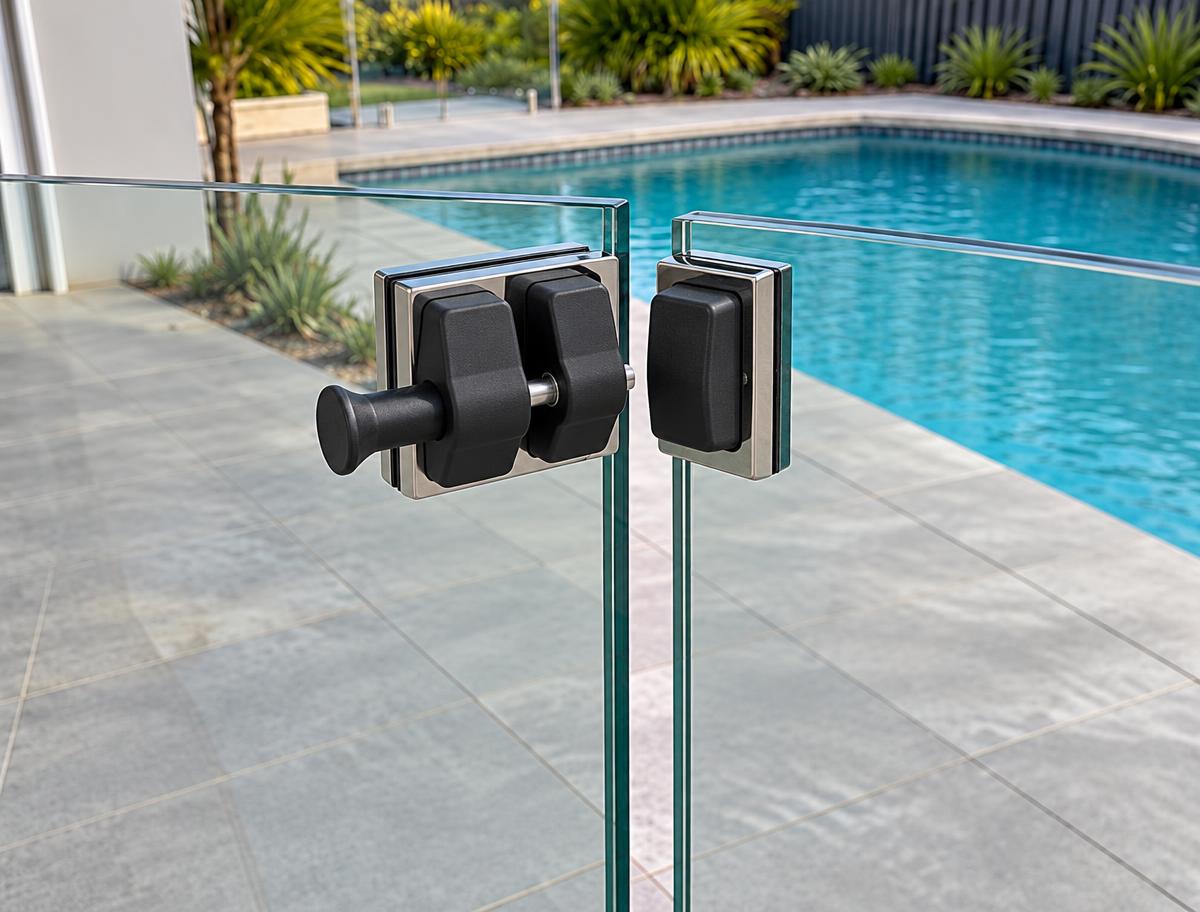
A gate that closes only from fully open, needs a push to catch, drags on paving or can be pulled, pushed or jiggled open is not doing its job. Queensland pool gates must open away from the pool and self-close and self-latch from any open position.
What to check
Let go from fully open, halfway and almost closed. Repeat several times without helping it. Once latched, check it cannot be pushed, pulled or jiggled open.
How to fix it
Remove anything obstructing the swing and maintain the hinges and latch to the manufacturer's instructions. Have worn hinges, misaligned hardware or a sagging gate adjusted or replaced by a suitable tradesperson if needed. Never prop a pool gate open.
2. The latch or hinges are accessible to a child
Even a gate that closes properly can fail if a child can reach its release or use projecting hinges as steps. Low-mounted glass gate latches need particular attention to shielding and access gaps.
What to check
An outside latch release must be at least 1500mm above finished ground and 1400mm above the highest lower horizontal member. An inside release must be at least 150mm below the top of the gate or a hand-hole, with the required 450mm-radius shield and no gaps greater than 10mm within it. Hinges projecting more than 10mm need compliant spacing or protection.
How to fix it
Ask your inspector to assess the exact latch arrangement before moving it or adding a shield. Projecting hinges closer than 900mm apart need a compliant 60-degree safety cap on the lower hinge. Use hardware designed for pool gates, not an ordinary garden-gate latch.
3. The CPR sign is missing, faded or outdated
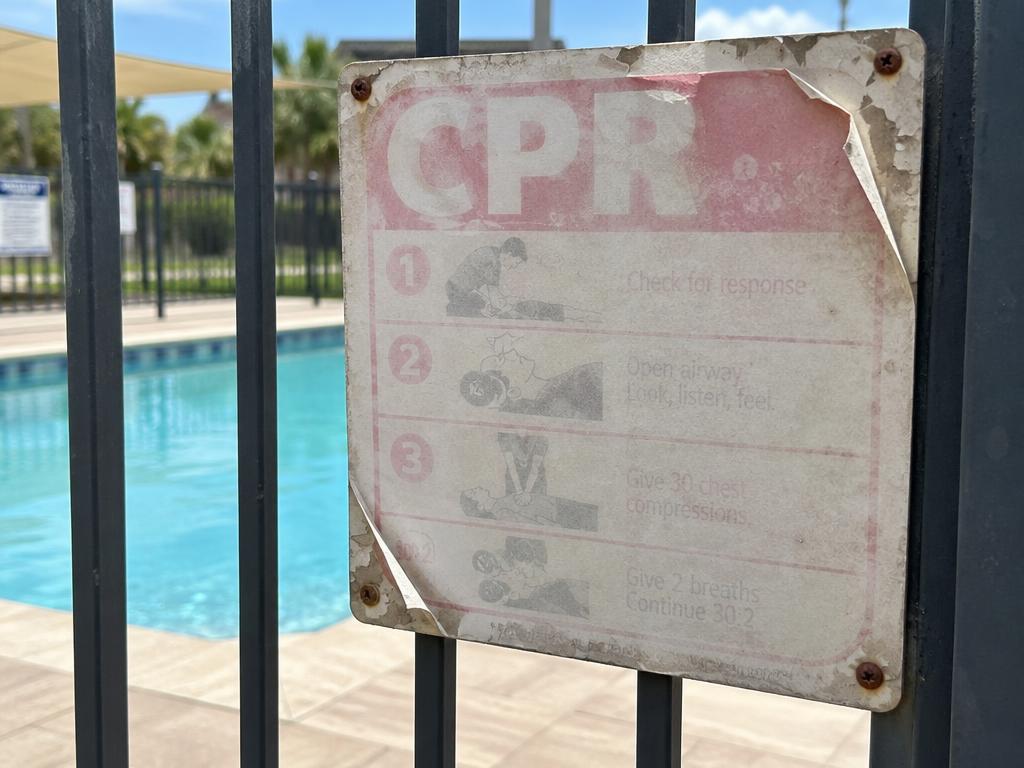
A sign that is missing, illegible, hidden behind plants or no longer shows the required CPR instructions can cause a failure. Having a sign somewhere on the property is not enough.
What to check
The sign must be at least 300mm by 300mm, durable and weatherproof, and conspicuous to a person near the pool. It must show CPR starting with 30 chest compressions followed by 2 breaths and a prominent emergency response statement.
How to fix it
Replace a faded or unsuitable sign with a compliant current CPR sign and position it in plain view from the pool area. You can install it yourself, or we can usually supply and install one for you.
4. Furniture, BBQs or pot plants make the fence climbable
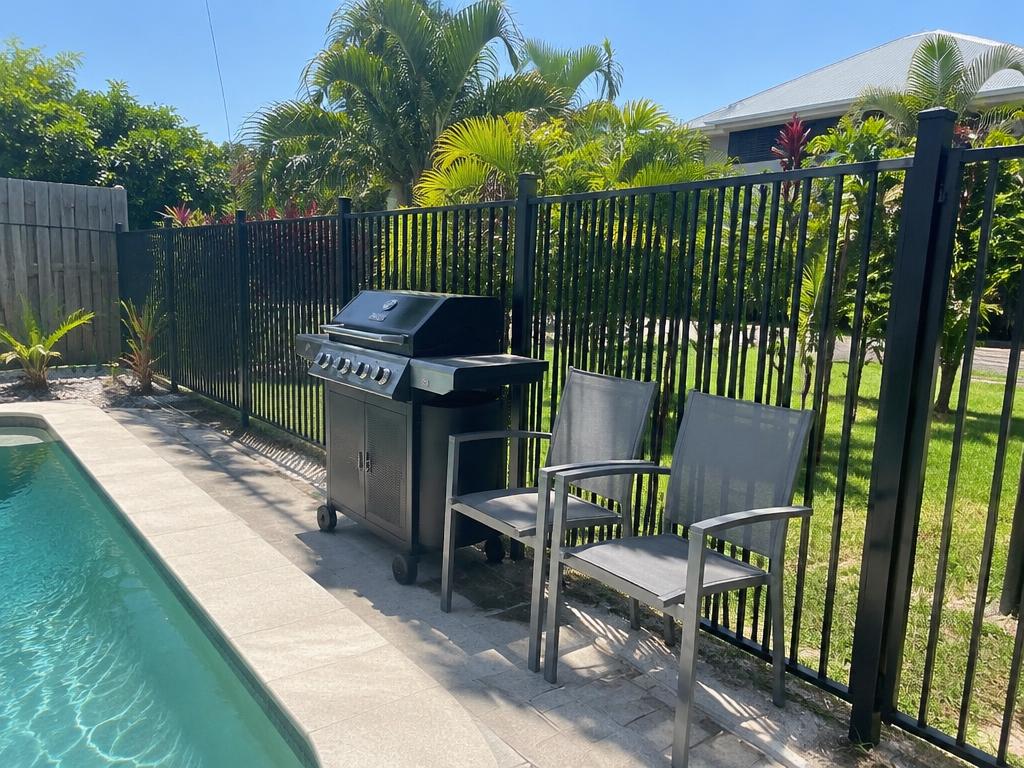
A BBQ, chair, plant pot, bin, toy or air-conditioning unit can become a step over an otherwise sound barrier. New outdoor furniture often changes a previously clear non-climbable zone.
What to check
For fences under 1800mm, keep climbable objects at least 900mm from the outside and 300mm from the inside, adjacent to the external non-climbable zone. A fence at least 1800mm high can use a different internal non-climbable-zone arrangement; do not assume it is exempt from checks.
How to fix it
Move portable objects out of the required zones. Fixed items, decks and raised beds may need shielding or changes to the barrier, so get advice before buying materials or starting work.
5. Trees, shrubs or branches provide a climbing route
Climbable vegetation can grow back into the non-climbable zone between inspections. A neighbour's branches can also provide access over a boundary fence.
What to check
Look for trunks, sturdy branches and other climbable vegetation within the 900mm outside non-climbable zone, where that arrangement applies. Check the inside as well, including fences that rely on an internal zone.
How to fix it
Trim back climbable vegetation and allow for regrowth, rather than cutting only enough for inspection day. Discuss overhanging branches with your neighbour and obtain any required permission before accessing their property or doing tree work.
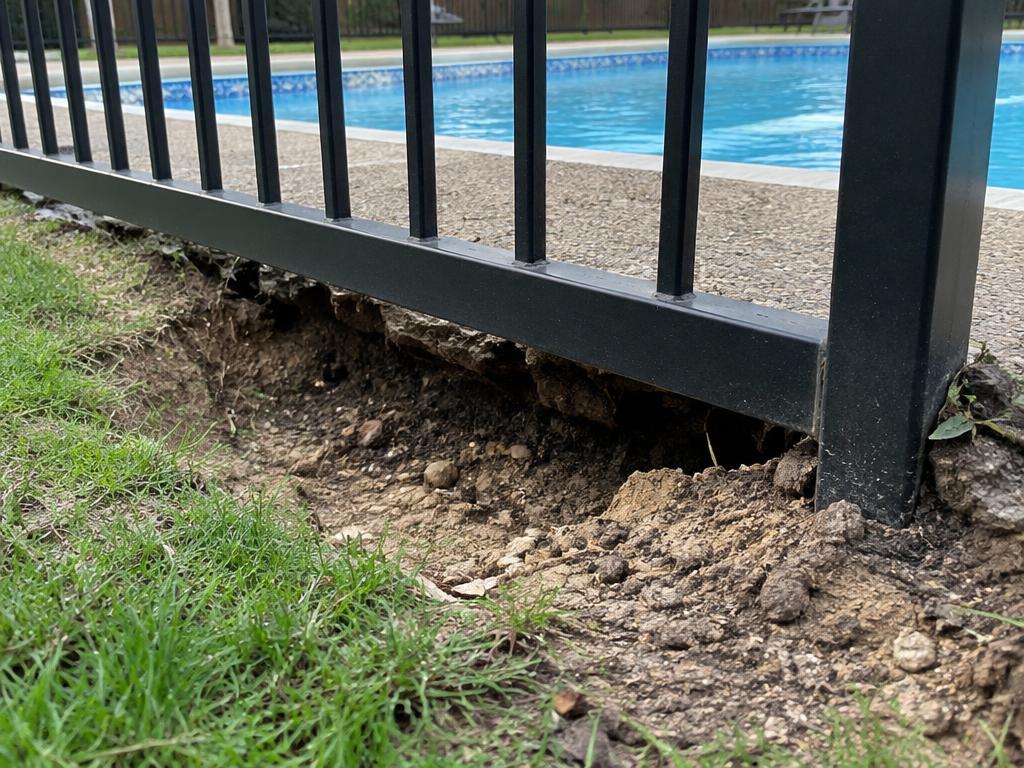
6. There is a gap greater than 100mm under the fence
Heavy rain, erosion, animals or loose garden material can open a crawl-through gap. Glass panels beside steps are another place where excessive gaps are easily missed.
What to check
Measure the full fence line: the gap from finished ground to the bottom of the barrier must not exceed 100mm. Check steps and corners, and make sure the surface underneath is solid and stable.
How to fix it
Arrange a durable solution that cannot wash away or be easily moved by a child. Loose soil, sand or mulch is not a reliable fix. Changes to panels, paving or drainage may need a suitable tradesperson and must not create another compliance problem.
7. Landscaping or paving has reduced the fence height
Raised garden beds, new paving or soil build-up can make a fence effectively too low. A fence that measures 1200mm in one spot can still fail elsewhere on a slope or beside stairs.
What to check
The barrier must be at least 1200mm above finished ground or the relevant stable surface at every point. Measure at right angles to that surface. Check any 1800mm barrier arrangement against its own height and non-climbable-zone requirements.
How to fix it
Remove problematic ground build-up or arrange appropriate changes to the barrier. Get advice before lowering ground or raising panels: the repair must also maintain compliant gaps, structural stability and non-climbable zones.
8. Fence panels, palings or fixings are damaged or loose
Rotting timber, corroded fixings, loose glass panels or missing bars can allow access through the barrier. A cracked panel is not made safe just because it still stands upright.
What to check
Look along every section for missing, broken or loose parts, glass fractures and holes or gaps greater than 100mm in any direction. The barrier must be rigid, strong and securely fixed.
How to fix it
Have damaged components repaired or replaced promptly with suitable materials. Do not handle cracked glass yourself. Before replacing a whole fence or barrier, check the current standard and any building approval requirements with your inspector or building certifier.
9. Boundary rails or intersecting fences create footholds
Horizontal rails and fence intersections can provide a ladder into the pool area. A boundary fence is part of your pool barrier, not something you can leave out of the inspection.
What to check
For fences under 1800mm, check the outside non-climbable zone, including accessible rails or objects on the neighbour's side. Fences at least 1800mm can rely on a compliant internal 900mm zone measured from the top, but their inside height and nearby surfaces still matter.
How to fix it
Ask your inspector whether compliant rail wedges, shielding, a height change or a separate barrier is appropriate. Discuss shared-fence changes and access with your neighbour first. Do not attach improvised modifications and assume they meet the standard.
10. Doors, windows or balconies allow access to the outdoor pool
A house door opening straight into an outdoor pool area is not a compliant barrier arrangement. Low opening windows, louvres or a nearby balcony can also give a child access.
What to check
No door should open directly into the outdoor pool or spa area. Windows need a compliant arrangement: for example a permanent 100mm opening restriction or suitable fixed security screen, or the qualifying height/drop and non-climbable-zone conditions. A lock alone is not a permanent restriction. Balconies over or within 900mm of the fence need compliant balustrades.
How to fix it
Have your inspector assess the access route before fitting restrictors, screens or extra fencing. Where relevant, QBCC guidance allows a 1200mm inside window height with no climbable objects within 900mm, or a clear 1800mm drop to the pool area. Indoor pool door arrangements have separate requirements.
What happens if your pool does not pass?
Your inspector explains the non-compliant items and, where required, issues a Pool Safety Non-conformity Notice (Form 26). You have three months from the initial inspection to rectify the defects and have the pool re-inspected by the same inspector. If the pool is still not compliant at the end of that period, the inspector must notify the local government.
Once the pool complies, a Pool Safety Certificate (Form 23) can be issued. Our $195 inspection includes the government certificate fee and one free re-inspection within the three-month period. Repair work is not included in that inspection price. See inspection pricing and inclusions.
Selling or renting? Allow time for repairs and re-inspection, and check our guides for selling a house with a pool and rental properties.
Common questions about failed inspections
Can one small defect fail a pool safety inspection?
Yes. A certificate can only be issued when the pool complies with the applicable standard. A single faulty latch, excessive gap or missing CPR sign may prevent certification, even if the rest of the barrier looks good.
Does clear water or an unused pool mean the barrier will pass?
No. Pool safety certification assesses compliance with the pool safety standard, not how often you swim or how clean the water looks. Spas also need a compliant barrier; a lockable lid is not a compliant substitute.
Can I change inspectors after a failed inspection?
Generally, you cannot engage another inspector during the three-month period after the initial inspection without written QBCC approval. Arrange the re-inspection with the same inspector once the listed defects have been fixed.
Should I fix everything before booking?
Fix obvious issues such as movable climbable objects and missing signs first. If you are unsure about structural work, boundary fences or access from the house, ask for advice before spending money. A pre-check does not guarantee certification.
Your local licensed inspector
Wayne is the owner operator of Sunshine Pool Safety and a Licensed Queensland Pool Safety Inspector, QBCC licence PS1258802. If you are unsure about a latch, boundary fence or planned alteration, call 0459 247 765 before committing to work.
We inspect pools across the Sunshine Coast and hinterland, including Noosa, Coolum, Buderim, Caloundra, Maleny and Cooroy. Check your suburb in our service area.
Book your pool inspectionOfficial Queensland sources
- QBCC: Pool fences — height, gaps, glass panels and dividing fences
- QBCC: Gates, latches and hinges
- QBCC: Non-climbable zones
- QBCC: Doors, windows and balconies
- QBCC: CPR signs
- QBCC: Inspect and certify a pool — certificates and non-conformity notices
Updated 10 November 2026 using QBCC guidance. This guide is general information, not a certificate or a guarantee of compliance. Exact requirements depend on the barrier arrangement; seek advice from a licensed pool safety inspector or building certifier before structural changes.